Wednesday, February 28, 2018

Does Canned Pumpkin Help with Dog Diarrhea?

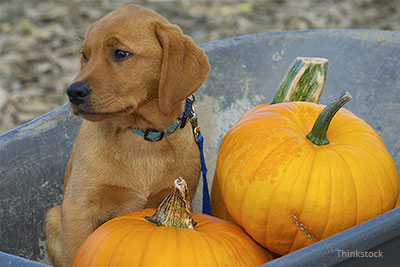
Dog with pumpkins in a wheelbarrow
Jack-o-lanterns, Halloween decorations, Thanksgiving, and pumpkin pie, this is certainly the pumpkin season. But, do you know that pumpkins can be important year-round for some pets? Canned pumpkin is a commonly prescribed dietary additive for some gastrointestinal maladies. From diarrhea to constipation, pumpkin can be a dog’s (or cat’s) best friend.

What is canned pumpkin?

The canned pumpkin that’s recommended by veterinarians is nothing more than pumpkin that has been pureed. It is a source of fiber that is low in fat and cholesterol. When purchasing canned pumpkin at the grocery store it is important to read the label carefully. Pie-filling canned pumpkin has added ingredients such as sugar, fat, and various seasonings. It is the pure pumpkin product that veterinarians recommend. 

[Editor’s Note: Not everything pumpkin flavored is safe for dogs. Make sure you are only using a product recommended by your veterinarian.]

How can pumpkin help dogs?

Canned pumpkin can provide a number of health benefits based primarily on its fiber content. Be forewarned that canned pumpkin is mostly water, to the tune of approximately 90%. This means that the content of fiber is not nearly as much as is found in Metamucil®. 

Pumpkin isn’t a be-all and end-all remedy for cats and dogs with gastrointestinal issues, but it is a reasonably harmless thing to try. If this has you thinking, “Hmm, maybe I’ll give the canned pumpkin a try,” I urge you to consult with your veterinarian before doing so. In some cases, added fiber could cause more harm than good. All this being said, your veterinarian might suggest canned pumpkin be used in the following ways for some dogs:
  • For diarrhea: Fiber can act as a sponge that absorbs excess water within the gastrointestinal tract. Diarrhea has a myriad of causes and added dietary fiber can benefit some of them.
  • For constipation: When there isn’t excess water in the gastrointestinal tract, fiber can help draw in water and ease stool passage. Fiber can also create bulk within the colon that helps alleviate constipation for some animals.
  • For weight loss: Pumpkin provides a relatively low-calorie way to give an animal the sense of a full stomach. This can make the reduction of overall food quantity more tolerable for the dieting animal.
How much pumpkin should you feed?

The amount of canned pumpkin needed to provide benefit will vary from dog to dog, so check with your veterinarian. For example, a Chihuahua may require only a teaspoon per meal, whereas a half cup may be required for a Great Dane. As with any dietary additive, it’s best to start small and then work your way up to the appropriate amount. Some animals don’t much care for this different tasting orange substance in their food bowl-- another reason to begin with only a small amount that is more readily disguised.

If you are feeding your dog only a small amount of pumpkin daily, you may not use an entire can before it spoils. Consider placing the pumpkin in ice cube trays and freezing. Blocks can then be thawed as needed. 

Questions for your veterinarian
  • Might my pet benefit from the addition of canned pumpkin?
  • How much-canned pumpkin should I feed and how frequently?
  • What should I be watching for once the pumpkin is started?
If you have any questions or concerns, you should always visit or call your veterinarian -- they are your best resource to ensure the health and well-being of your pets.

Thyroid Tumor Surgery in Cats


Did you know that cats can have a hyperactive thyroid gland? Also known as hyperthyroidism, it’s a fairly common condition in older cats. In fact, the vast majority of affected cats are older than 10 years of age. Most of the time, the reason is either a benign tumor or benign enlargement of the thyroid gland(s).

What is hyperthyroidism?
Hyperthyroidism is when thyroid glands work overtime and produce too much thyroid hormone. Because this hormone controls many organs, it can lead to multiple consequences:
Occasionally, a chubby couch potato kitty with gorgeous hair may turn into a skinny old cat with a rough hair coat, running around the house like a maniac.

How is hyperthyroidism diagnosed?
Since some of the signs of hyperthyroidism can be similar to other diseases, it’s important to perform a full work up. This starts with a thorough physical exam. A small nodule on the thyroid can often be felt by your veterinarian.

Blood work, including measurement of the thyroid hormone level, is the next logical step. The increased metabolic rate of hyperthyroidism can hide kidney issues and cause heart complications, so both should be monitored before and after treatment has been started. This requires blood work, X-rays, and ultrasound.

How is hyperthyroidism treated?
There are several treatment options:
  • Methimazole is a medication that fights hyperthyroidism. It is usually given by mouth, every single day. Methimazole can also be compounded into a cream which is applied to the skin or the ear daily (transdermal application).This is a life-long treatment.
  • I know about at least one special diet that is very low in iodine and was introduced a few years ago. If your veterinarian recommends this option, this is the only food your cat should eat for good results.
  • Veterinary endocrinologists consider IV radioactive iodine treatment as the gold standard for hyperthyroidism.
  • Surgery to remove the tumor is an option, although it is less and less common. It’s a delicate surgery but in good hands, it is highly successful.
What are the risks of thyroid surgery?
In addition to the risks of anesthesia [see common anesthesia myths here], one of the main risks of surgery is damage or accidental removal of the parathyroid glands. There are two parathyroid glands on each side: one inside each thyroid gland, and one just outside of each thyroid gland. When we remove the thyroid gland, we remove the “internal” parathyroid gland. If we remove both thyroid glands, then we remove both internal parathyroid glands. So there are only two external parathyroid glands left. If they are removed accidentally, along with a large thyroid mass, or if they are damaged during surgery, then three or even all four parathyroid glands might be removed.

As a consequence, the cat may have a complication called hypocalcemia, which means that the calcium levels in the bloodstream are dangerously low.

What medications are needed after thyroid surgery?
Besides the usual pain medications and antibiotics, the hypocalcemia (low calcium) needs to be managed if it develops. This is typically done by giving calcium supplements and/or vitamin D. Their dosages are slowly tapered over time as the body slowly takes over. In addition, calcium is provided once the cat eats enough food.

What is the outcome of hyperthyroidism treatment?
Thyroid cancer (adenocarcinoma) is an aggressive tumor but thankfully very rare. The outcome for that is usually poor.

Benign tumors (adenomas) and benign enlargement of the thyroid gland are much more common and have a much better outcome. However, the outcome also depends on whether complications occur with the kidneys or the heart. Most cats live years after the initial diagnosis.

As with any disease, the sooner you address it, the more options you have and the better the outcome. If your cat is acting out of sorts in any way, please see your veterinarian as soon as possible.

Questions to ask your vet if your cat has a thyroid mass:
  • What is the best treatment for my cat?
  • What are the risks of anesthesia?
  • What are the risks of surgery?
If you have any questions or concerns, you should always visit or call your veterinarian -- they are your best resource to ensure the health and well-being of your pets.

Tuesday, February 27, 2018

4 Smart Ways Pet Owners Protect Their Furry Loved Ones


Smart Ways Pet Owners Protect Their Furry Loved Ones
I, like many others, treat my pet like an extension of the family. I celebrate its birthday, spend money on food and toys, and plenty of other pet-related expenses from accessories to shots. Throughout the years, between having my own pets and friends having pets, I’ve seen my fair share of pet products and resources. There are several factors to consider when purchasing products for our furry family members. Here are four smart ways that pet owners protect their furry loved ones.
#1: Security
My friends’ friend lost two of their dogs. They did the normal routine of wandering the neighborhood, asking neighbors, and posting to lost & found boards. They did eventually find them after 2 days, but you never quite know if someone will pick your pet off the streets to call it their own. GPS tracking like you find in supply Garmin alpha collars could have used to find the location of the dogs and saved a whole lot of time and worry.
#2: Health
I make it a point to keep up with recalls and alerts with pet products and food – I highly suggest each one of you pet owners do the same. It can help you:
  • Prevent the chances of feeding pets deadly food
  • Not giving pets dangerous toys causing choking hazards
  • Avoiding ill-reviewed beauty products known to cause problems.
#3: Safety
The danger lies in both expected and unexpected places, and things can happen when pets:
  • Get into toxic items and get poisoned
  • Chew on electrical cords and start fires
  • Start a fight and get seriously injured
A video security system, a bit like a nanny cam, may be desirable for folks that work or are out for a large amount of time. These setups will let you check in on pets while you’re away at work/vacation or having a pet sitter over. It gives peace of mind knowing they’re doing well but also lets you quickly react in case there’s an emergency.
#4: Common Sense
I think it’s a good idea to consider your pet(s) extended members of the family. This way, you’re treating them kindly and looking after their health and well-being more so than if they’re seen as an animal. Using common sense goes a long way towards keeping pets safe.
We make our children wear seat belts. Out pets should be restrained during automobile travel as well. Allowing a pet to free roam in your vehicle while operation can cause accidents. It’s illegal in a lot of areas, too, which come with high fines. A loose pet on the roadway – either from getting out of the house or running off during a pit stop – is an accident waiting to happen. Keep your pets safe like you would any other member of the family by getting pet restraints for your vehicle. This will keep them from roaming and stops them from becoming a projectile in an accident.
What else could we do to improve their lives?
  • Take them out and let them be social more often.
  • Avoid giving them table scraps that may harm their digestion.
  • Do regular checkups and screenings for their health.
Do you have any tips for helping to keep a family pet safe?

Monday, February 26, 2018

5 "Silent" Killers of Cats


Posts by: 
5
When it comes to caring for your cat, I have a few simple recommendations:
By following these basic tips, you can help keep your four-legged, feline friends healthy--potentially for decades! But as cat guardians, you should also be aware of five “silent” killers in cats. By knowing what the most common silent killers are, you can know what clinical signs to look for. With most of these diseases, the sooner the clinical signs are recognized, the sooner we veterinarians can treat.

1. Chronic kidney disease
One of the top silent killers of cats is chronic kidney disease (CKD) (This is sometimes called chronic renal failure or chronic kidney injury). These terms are all semantically the same, and basically, mean that 75% of both the kidneys are ineffective and not working. Clinical signs of CRD include:
  • Excessive drinking
  • Excessive urinating
  • Larger clumps in the litter box
  • Weight loss
  • Bad breath (due to toxins building up in the blood and causing ulcers in the mouth, esophagus, and stomach)
  • Lethargy
  • Hiding
Thankfully, with appropriate management, cats can live with CKD for years (unlike dogs where CKD usually progresses more rapidly). Chronic management may include a low-protein diet, frequent blood work, increasing water intake (e.g., with a water fountain or by feeding a grueling canned food), medications and even fluids under the skin (which many pet guardians do at home, once properly trained).
[10 common causes of kidney disease in cats.]

Tri-colored cat looking up2. Hyperthyroidism
Hyperthyroidism is an endocrine disease where the thyroid gland produces too much thyroid hormone. This is seen in middle-aged to geriatric cats and can result in very similar clinical signs to chronic kidney disease including:
However, as hyperthyroidism increases the metabolism of cats, it causes one defining sign: a ravenous appetite despite weight loss. It can also result in:
  • A racing heart rate
  • Severe hypertension (resulting in acute blood loss, neurologic signs, or even a clot or stroke)
  • Secondary organ injury (e.g., a heart murmur or changes to the kidney)
Thankfully, treatment for hyperthyroidism is very effective and includes either a medication (called methimazole, surgical removal of the thyroid glands (less commonly done), a special prescription diet called y/d® Feline Thyroid Health) or I131 radioiodine therapy. With hyperthyroidism, the sooner you treat it, the less potential side effects or organ damage will occur in your cat.
[Learn more about hyperthyroidism in cats.]

Big cat on couch3. Diabetes mellitus
Another costly, silent killer that affects cats is diabetes mellitus (DM). As many of our cats are often overweight to obese, they are at a greater risk for DM. With diabetes, the pancreas fails to secrete adequate amounts of insulin (Type I DM) or there is resistance to insulin (Type II DM). Insulin is a natural hormone that drives sugar (i.e., blood glucose) into the cells. As a result of the cells starving for glucose, the body makes more and more glucose, causing hyperglycemia (i.e., a high blood sugar) and many of the clinical signs seen with DM. Common clinical signs for DM are similar to those of Chronic kidney disease and hyperthyroidism and include:
  • Excessive urination and thirst
  • Larger clumps in the litter box
  • An overweight or obese body condition with muscle wasting (especially over the spine or back) or weight loss
  • A decreased or ravenous appetite
  • Lethargy or weakness
  • Vomiting
  • Abnormal breath (e.g., acetone breath)
  • Walking abnormally (e.g., lower to the ground)
Treatment for DM can be costly, as it requires twice-a-day insulin injections that you have to give under the skin. It also requires changes in diet (to a high protein, low carbohydrate diet), frequent blood glucose monitoring, and frequent veterinary visits. With supportive care and chronic management, cats can do reasonably well; however, once diabetic complications develop (e.g., diabetic ketoacidosis, hyperosmolar, hyperglycemic syndrome), DM can be life-threatening. 
[Learn more about diabetes mellitus in cats.]

Ragdoll with flowers4. Cardiac disease
Heart disease is very frustrating for both cat owners and veterinarians. That’s because, while dogs almost always have a loud heart murmur (i.e., one we can hear with our stethoscope) indicative of heart disease, cats often don’t have a heart murmur present. In fact, it’s estimated that 50% of cats with heart disease have no auscultable heart murmur. Clinical signs of heart disease include:
  • A heart murmur
  • An abnormal heart rhythm (e.g., an abnormal beat and rhythm)
  • A racing heart rate
  • Collapse
  • Passing out (e.g., syncope)
  • Increased respiratory rate
  • Difficulty breathing
  • Blue-tinged gums
  • Open mouth breathing
  • Acute, sudden paralysis (e.g., typically of the hind limbs)
  • Cold, painful hind limbs
  • Sudden pain
  • Sudden lameness
  • Sudden death
Once a cardiac disease is diagnosed (typically based on physical exam, chest radiographs, Cardiopet® proBNP Test, and an ultrasound of the heart called an “echocardiogram”), treatment may include emergency care for oxygen therapy, diuretics, blood pressure support, and heart medications. Long-term prognosis is poor, as the heart medication does not cure the heart disease; it prevents a cardiac disease from getting worse. The exception is when a cardiac disease is caused by hyperthyroidism, which often gets better once the hyperthyroidism is treated!
[Learn more about feline heart disease.]

Bengal laying down5. Cancer
As dogs and cats live longer, we as veterinarians are seeing more cases of cancer. The most common type of cancer in cats is gastrointestinal cancer, often due to lymphosarcoma. Clinical signs of cancer include:
Once diagnosed, the prognosis for cancer is poor. For this reason, the sooner you notice clinical signs, the sooner diagnosis and treatment may be initiated.
[Learn more about cancer and cats.]

Note that there are other common emergencies that can cause death in cats, including trauma, urinary obstructions, poisonings, and more. When in doubt, to keep your cat safe, follow these 5 simple tips:
  1. Keep your cat indoors to prevent any trauma (e.g., being hit by a car, attacked by a dog, accidentally poisoned, etc.)
  2. Make sure to keep your cat's weight down – this can help prevent costly problems due to obesity such as diabetes down the line.
  3. Make sure to schedule your annual visit with your veterinarian. This is especially important as we can pick up on physical abnormalities sooner. Note that even if your cat is indoors, she still needs an annual exam; you may be able to skip some of the vaccines (and schedule them to every third year instead) but don’t skip on the exam!
  4. Keep the litter box clean. While this sounds simple, frequent and daily cleaning of the box is a must. Not only will this alert you to life-threatening emergencies like feline urethral obstructions, but it’ll make you aware if your cat is urinating more or less than usual — and help you pick up medical problems sooner!
  5. Seek veterinary attention as soon as you notice any clinical signs – not months after your cat has been urinating and drinking excessively!
When it comes to your cat’s health, make sure you’re aware of these common silent killers. The sooner you notice the signs, the sooner we can run blood work and diagnose the medical problem. The sooner we diagnose the problem, the sooner we can treat it!
If you have any questions or concerns, you should always visit or call your veterinarian -- they are your best resource to ensure the health and well-being of your pets.


What You Need To Know About Heartworm Disease


What is Heartworm Disease?
Heartworm disease is caused by the parasite Dirofilaria immitis, a type of roundworm that lives inside the heart and blood vessels of the lungs. Heartworm disease is transmitted by mosquitoes. It is a serious disease that primarily affects the heart and lungs but can also affect the liver, kidney, eye, and central nervous system, and if untreated, can cause death.

Symptoms
The symptoms of heartworm disease are subtle and can be easy to miss. As the number of heartworms increases, the symptoms of coughing, lethargy, exercise intolerance, lack of appetite and weight loss become more apparent. However, it is best not to wait until symptoms develop since irreversible damage may have already occurred by then.

Who is at risk?
Heartworm disease has been found in all fifty states, though it is more prevalent in the southeast and along the Mississippi River. Studies by the American Heartworm Society (AHS) have found that heartworm infections are increasing across the United States. While most people know that heartworm disease affects dogs, many are unaware that it can also affect cats. It was once believed that cats were resistant to heartworm infections but recent studies have shown this is not the case. Cats, just like dogs, can get heartworm disease. The fact is any animal can be bitten by a mosquito and therefore become infected with the parasite. Speak with your veterinarian about your particular pet’s risks and how to protect them.
How is it diagnosed?
Heartworm disease is most commonly diagnosed using blood tests that detect the presence of heartworms. Many veterinarians run these fast, simple tests in the clinic and can give you results within minutes. Depending on the test results and the animal’s symptoms additional laboratory tests, radiographs, and a cardiac ultrasound may also be recommended to determine infection and severity. 

How is it treated?
The goal of treatment is to kill the heartworms without harming the patient. Fortunately, the treatment options have improved but they still have potential risks. Infected animals usually receive a series of intramuscular injections, hospitalization and then strict confinement to limit exercise for weeks. The fact is, treatment is expensive, time-consuming and not without risks. For these reasons, the goal should always be prevention rather than treatment of this horrible disease.

Prevention
The best way to treat heartworm disease is to prevent it in the first place. Fortunately, there are numerous safe and effective preventative medications available. Heartworm preventative medications are available from your veterinarian in many forms: oral, topical, and injectable. In addition to protecting your pets from heartworm disease, many of the heartworm preventatives also protect your pet against other internal parasites. This is important because it helps prevent the spread of parasites. So not only are you getting heartworm protection for your pet but also peace of mind that your pet has not picked up parasites like roundworms that can be transmitted to other pets and even humans. Finally, before starting preventative medications on pets over 6 months of age, have your veterinarian test them for heartworm infection because serious complications can develop if an infected animal is started on certain preventatives.
If you have any questions or concerns, you should always visit or call your veterinarian – they are your best resource to ensure the health and well-being of your pets.

How to Help a Dog with Hip Dysplasia (Home Treatments)

Hip dysplasia in dogs  is categorized by an abnormal formation in the ball and socket joints, resulting in said joints that grind against...